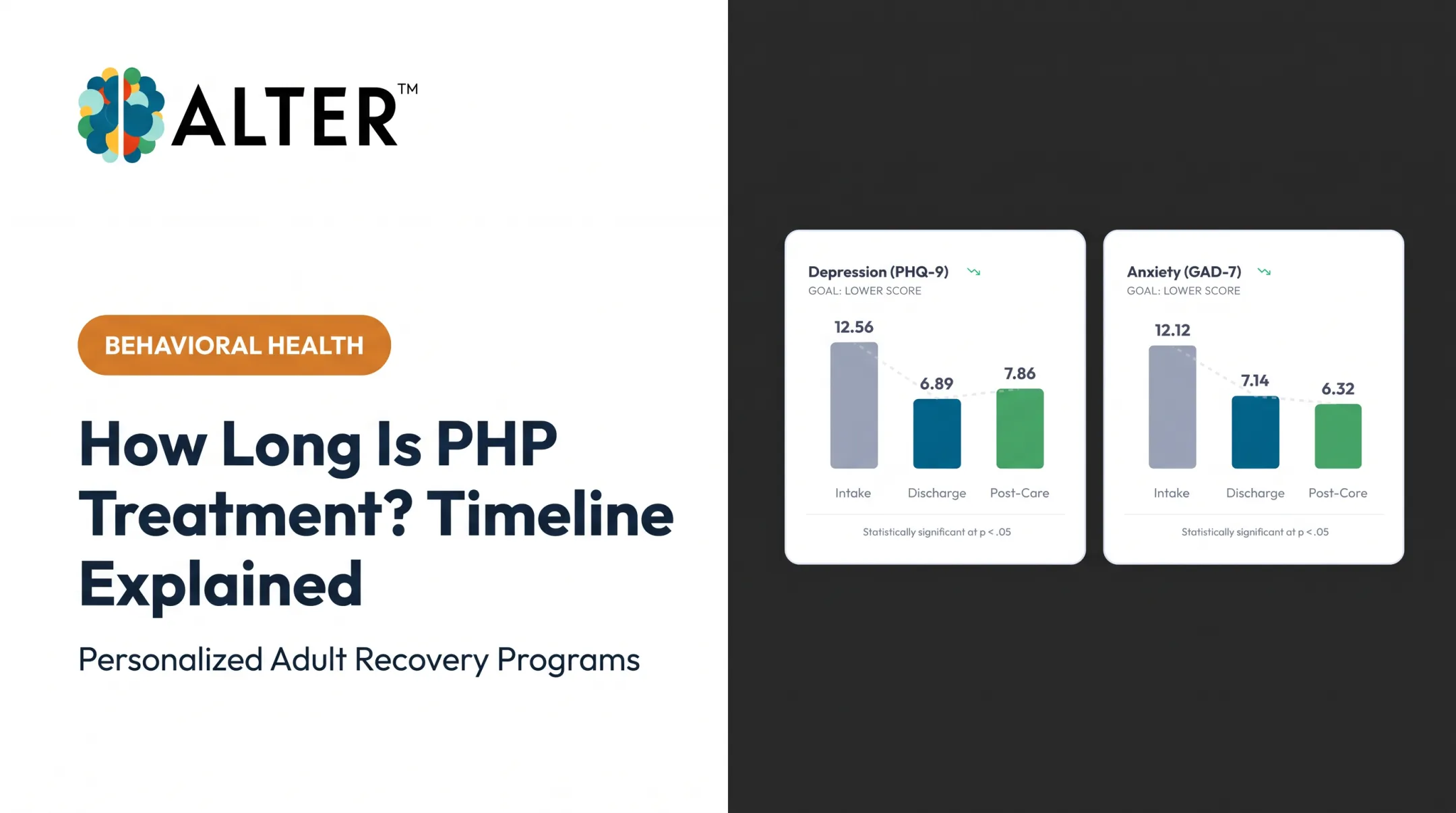

PHP delivers intensive, structured treatment during the day while letting you return home at night. It's more support than a weekly therapy session but doesn't require living at a facility.
Many people struggle to know whether PHP, inpatient care, IOP, or traditional outpatient therapy fits their situation. This article breaks down what PHP actually involves, how a typical day works, who benefits most, and what it costs.
A note on safety: if you or someone you know is facing a psychiatric or medical emergency, call 911 or go to the nearest emergency room immediately. Don't wait for a PHP assessment or admissions call.
Key Takeaways
- PHP provides structured daytime treatment, typically four to eight hours a day, without an overnight stay.
- It sits between inpatient or residential care and lower-intensity outpatient or IOP services.
- Candidates need enough stability to stay safe during evenings at home.
- Cost and duration depend on diagnosis, insurance authorization, and clinical progress.
- Alter Behavioral Health offers PHP as part of a broader continuum spanning residential, IOP, and outpatient care.
What Is PHP Treatment?
A partial hospitalization program delivers structured, hospital-level psychiatric treatment during the day without requiring an overnight stay. It's a middle ground: more support than weekly therapy, less restrictive than living at a treatment facility.
Medicare's coverage standards require a documented need for at least 20 therapeutic hours per week. Daily sessions typically run four to eight hours, according to CMS's benefit policy manual. That's a federal benchmark, not a universal rule. Actual hours, attendance requirements, and covered services vary by provider and insurance plan.

Where PHP Fits in the Continuum of Care
PHP occupies a specific spot in behavioral health treatment:
- More intensive than standard weekly outpatient therapy or intensive outpatient programs
- Less restrictive than inpatient hospitalization or residential treatment, since there's no overnight stay
- Built on active treatment: coordinated therapy, psychiatric oversight, and skills practice, not just a longer appointment
At Alter Behavioral Health, PHP means structured clinical programming during the day, with clients returning home or to sober living in the evenings.
Mental Health PHP vs. Addiction-Focused PHP
Not every PHP treats the same conditions:
- Mental health programs commonly address depression, anxiety, bipolar disorder, or trauma-related conditions
- Addiction-focused programs center on substance use disorders
- Dual-diagnosis tracks treat both at once, which matters because psychiatric symptoms and substance use frequently overlap
PHP delivers more than a longer therapy appointment. It combines:
- Coordinated clinical services from a multidisciplinary team
- Frequent contact with therapists and psychiatric providers
- Hands-on skills practice, not just talk therapy
- Treatment planning that evolves as you progress
How Does PHP Work?
Intake and Assessment
Before you start, a clinical team conducts a thorough evaluation covering:
- Current symptoms, diagnosis, and safety concerns
- Medical and psychiatric history, including medications
- Substance use patterns
- Daily functioning, home environment, and transportation
- Support system and personal treatment goals
Many programs complete a medical and psychiatric evaluation within the first 24 hours of admission, with a primary therapist building a treatment plan around that history.
A Typical Day in PHP
Daily structure varies by program, but most PHPs include:
- Morning check-in to assess mood, sleep, and overnight concerns
- Group therapy covering coping skills, emotional regulation, or relapse prevention
- Individual therapy sessions with an assigned therapist, often twice weekly
- Psychoeducation on diagnoses, medications, and healthy habits
- Breaks or meals, followed by additional skill-building or experiential groups
- Psychiatric check-ins and case management as scheduled
Evidence-Based Approaches and Medication Management
Programs typically draw from several clinical models:
- Cognitive behavioral therapy (CBT)
- Dialectical behavior therapy (DBT)
- Trauma-informed care
- Motivational interviewing
- Mindfulness practices
The mix depends on the program and your individual needs.
Medication management, when included, usually covers:
- Psychiatric evaluation
- Monitoring for benefits and side effects
- Medication education
- Coordination with your prescriber
Not every PHP changes or dispenses medication; some focus purely on monitoring.
Tracking Progress and Adjusting Care
Clinicians regularly review participation, symptom changes, daily functioning, and safety. If a strategy isn't working after a couple of weeks, the treatment team typically adjusts it.
Depending on progress, they may continue PHP, step you down to IOP or outpatient care, or recommend a higher level of care if symptoms intensify.

Who Is PHP For and What Are the Benefits?
Is PHP the Right Fit?
A good PHP candidate needs frequent, structured support but is stable enough, medically and psychiatrically, to spend evenings outside the program with a safe plan in place. Common reasons people consider PHP include:
- Symptoms that significantly disrupt work, school, or home life
- Limited progress in routine weekly outpatient therapy
- A co-occurring mental health and substance use condition
- Transitioning down from inpatient or residential treatment
When PHP May Not Be Enough
PHP isn't right for everyone. A higher level of care may be necessary when someone faces:
- Immediate danger to themselves or others
- Severe intoxication or withdrawal requiring medical management
- Unstable medical needs requiring 24-hour supervision
- No safe or supportive environment to return to each evening
Core Benefits
PHP offers several advantages over less structured care:
- A consistent daily routine that rebuilds stability
- Regular contact with therapists and psychiatric providers
- Peer connection with others facing similar challenges
- Real-world practice of coping and communication skills
- Continuity between higher and lower levels of care
Programs that address symptoms, underlying stressors, relationships, medication needs, and relapse planning together tend to support more durable change than approaches that isolate one symptom.
Effectiveness still depends on clinical fit, program quality, participation, and consistent follow-through. No program guarantees a specific outcome, and PHP works best as part of an individualized plan rather than a one-size-fits-all fix.
How Does PHP Compare With Other Levels of Care?
| Level of Care | Setting | Typical Intensity |
|---|---|---|
| Inpatient/Residential | Overnight stay, continuous supervision | Highest intensity, 24/7 care |
| PHP | Daytime treatment, home at night | High intensity, structured daily schedule |
| IOP | Daytime or evening sessions, home at night | Moderate, fewer weekly hours than PHP |
| Standard Outpatient | Scheduled appointments | Lowest intensity, appointment-based |
SAMHSA's treatment overview describes standard outpatient care as similar to a routine doctor's visit, while residential treatment means living at the program itself.
PHP vs. Inpatient or Residential Care
Inpatient care provides overnight residence and continuous on-site supervision. PHP provides intensive daytime treatment but requires a safe, supportive plan for the hours you're not in session.
PHP vs. IOP
PHP generally involves greater treatment intensity, more frequent contact, and a fuller daily schedule. IOP typically allows more time for work, school, or family responsibilities between sessions.
"Rehab" Isn't One Specific Level
"Rehab" is a broad term that might refer to detox, residential treatment, PHP, or IOP. When researching options, ask providers to name the specific level of care rather than assuming "rehab" means one particular setting.
Clinicians weigh safety, medical stability, symptom severity, home environment, and support systems when deciding between levels. A common progression starts with inpatient or residential care, then steps down to PHP, IOP, and standard outpatient. People still enter and exit at different points based on individual assessment.

Practical Questions About PHP
How Long Does PHP Last?
Duration depends on diagnosis, symptom severity, progress, and insurance authorization. Rather than expect a fixed timeline, ask your specific provider what range is typical for someone with your clinical presentation.
What About Cost and Insurance?
Out-of-pocket costs depend on several factors:
- Deductible and whether it's been met
- Copay or coinsurance percentage
- In-network versus out-of-network facility status
- Prior authorization requirements
- Specific services covered under your plan
Medicare's PHP coverage page notes that Part B may cover eligible PHP services, with daily coinsurance applying after the deductible. Commercial insurance terms differ significantly, so verifying benefits directly with your provider matters more than relying on general estimates.
Questions to Ask Before Enrolling
Before committing to a program, ask about:
- Daily schedule and total weekly hours
- Clinical credentials of therapists and psychiatric staff
- Staffing ratios and crisis response procedures
- Medication management policies
- Family involvement opportunities
- Transportation and telehealth availability
- Co-occurring disorder treatment capacity
- Insurance verification process
- Discharge planning and aftercare support
A Continuum Approach
Alter Behavioral Health offers partial hospitalization within a broader continuum that includes residential, IOP, outpatient, transitional, and therapeutic support services. That structure allows care planning to adjust as needs change, rather than forcing a restart with a new provider at each level.
Alter Behavioral Health holds the Gold Seal of Approval from The Joint Commission, a quality credential worth noting during research. Still, verify that any specific PHP (including this one) meets your clinical requirements and insurance needs before enrolling.
Conclusion
PHP fills a specific gap. It's structured, intensive daytime treatment that can bridge inpatient or residential care and less intensive outpatient services, giving people real support while they rebuild daily stability.
Choosing the right level of care shouldn't rest on diagnosis alone, cost, schedule convenience, or a general online description. A professional level-of-care assessment accounts for your full clinical picture and safety situation.
If you're considering PHP, reach out to Alter Behavioral Health or another qualified provider, verify insurance and program details directly, and seek emergency help immediately if safety is ever at risk.
Frequently Asked Questions
What does a partial hospitalization program (PHP) involve and how does it work?
PHP is intensive daytime behavioral health treatment combining assessment, individual and group therapy, psychiatric support when indicated, and skills-based work. You attend structured sessions during the day and return home or to a supportive setting each evening.
How long does a partial hospitalization program (PHP) typically last?
Duration varies based on symptoms, treatment goals, clinical progress, and insurance authorization. Your treatment team determines when you're ready to step down to a less intensive level of care.
How much does partial hospitalization (PHP) cost, and does insurance cover it?
Cost and coverage depend on your provider, insurance network, deductible, copay, and coinsurance structure. Verify your specific benefits directly with the program before starting treatment.
How does PHP differ from IOP and inpatient or rehab programs?
PHP offers a more intensive daytime structure than IOP, while inpatient and residential care involve overnight stays with continuous supervision. "Rehab" is a general term that can describe several different levels of care, so ask providers to specify.
Is partial hospitalization (PHP) effective and worth attending?
PHP can be appropriate and beneficial when matched to your clinical needs and safety situation. Outcomes depend on engagement, program quality, continuity of care, and individual circumstances rather than any guaranteed result.
Does PHP include medication management?
Many PHPs offer psychiatric evaluation and medication monitoring, though services differ by program. Confirm prescriber access, medication policies, and coordination procedures with the specific program you're considering.