
A data-driven view of clinical progress across Alter Healthcare programs.
The Alter Behavioral Health Outcomes Report pulls together results from 1,888 total assessments to show how people change during care and after they leave. Alter tracks progress using validated clinical tools, including PHQ-9 for depression, GAD-7 for anxiety, and PWI for daily life and stability. Alter collects these scores at intake, at check-ins during care, at discharge, and after discharge. This lets the report answer direct questions. Are symptoms going down? Do improvements hold after treatment ends? Do people do better in real life, not only on a test?
A data-driven view of clinical progress across Alter Healthcare programs.
The Alter Behavioral Health Outcomes Report pulls together results from 1,888 total assessments to show how people change during care and after they leave. Alter tracks progress using validated clinical tools, including PHQ-9 for depression, GAD-7 for anxiety, and PWI for daily life and stability. Alter collects these scores at intake, at check-ins during care, at discharge, and after discharge. This lets the report answer direct questions. Are symptoms going down? Do improvements hold after treatment ends? Do people do better in real life, not only on a test?
Client success/outcomes audit was performed by an independent 3rd party – Pacific Analytics
Outcomes data keeps care honest. It shows change with numbers, not opinions. Alter measures progress with the same clinical tools at multiple time points, from intake through post-discharge. This makes it easier to see real improvement during care and real stability after care. It also helps you see whether the gains last, not only whether someone felt better for a short time.
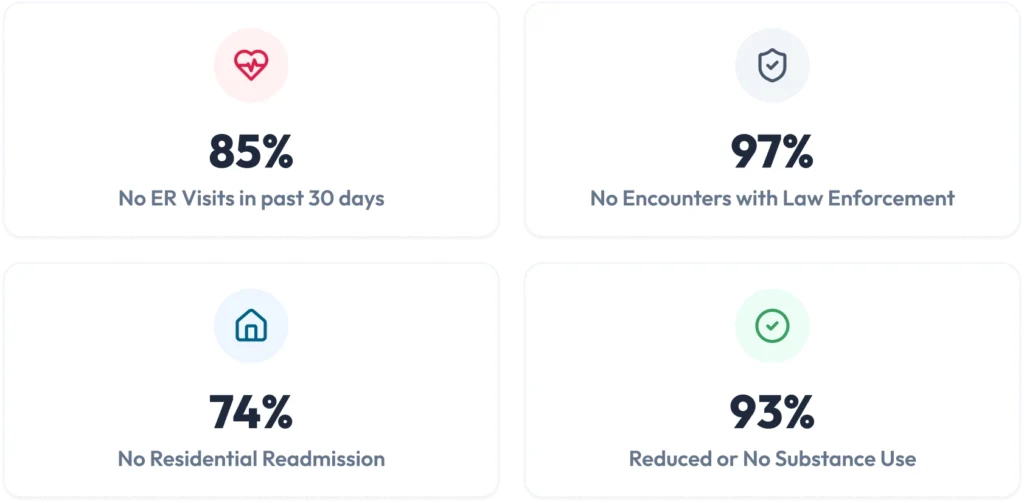
What does real progress look like when you measure it? Across the full group, patients show clear improvement in core symptoms and in daily stability. The results also extend beyond discharge, which matters because the real test starts after someone returns to normal life.
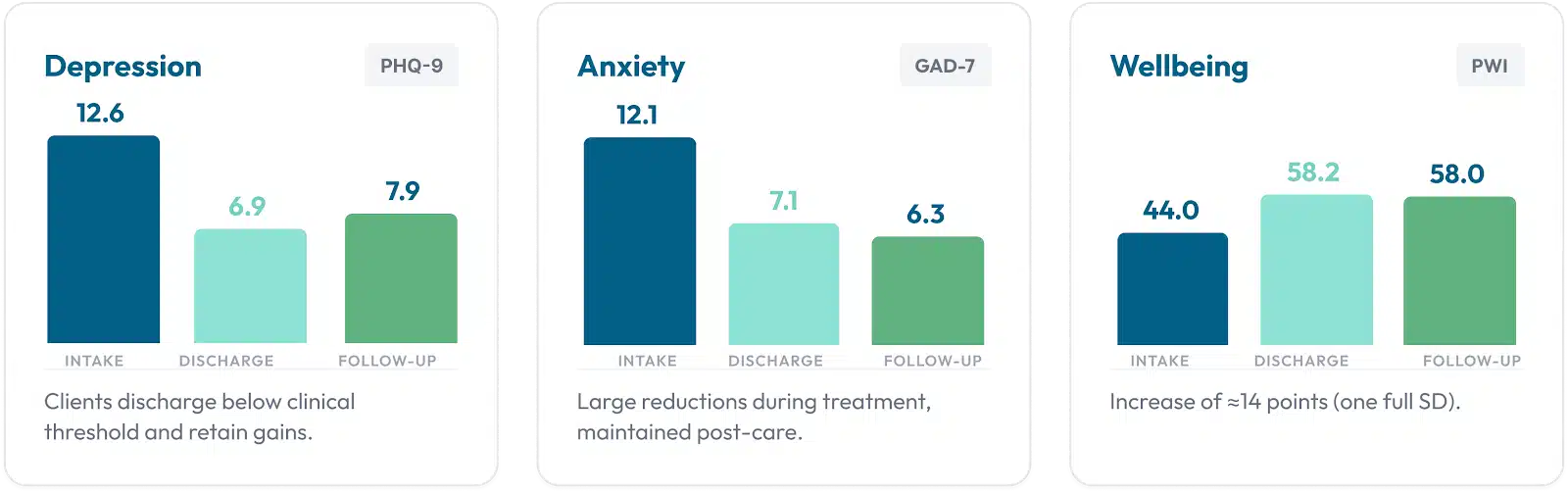
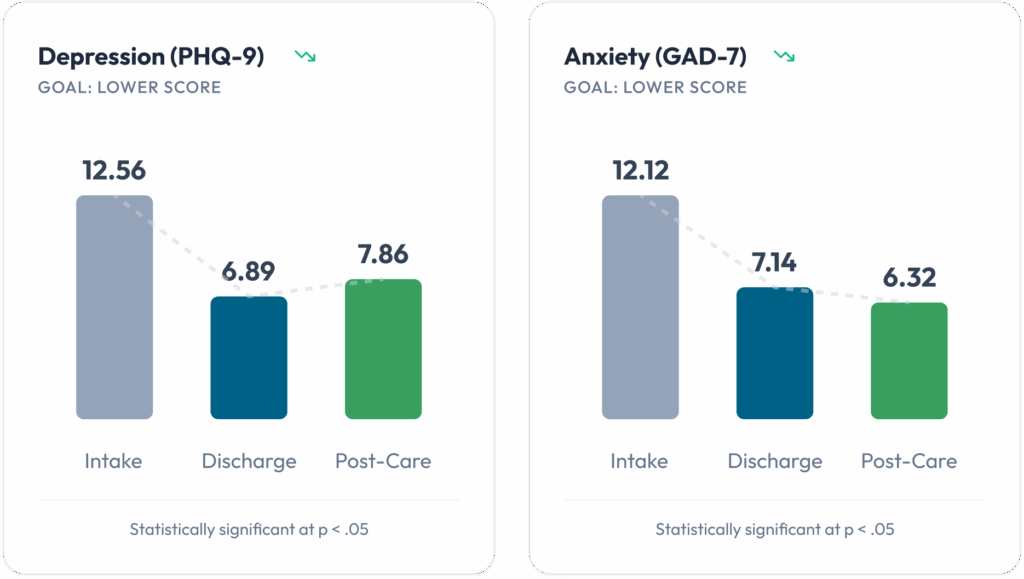
Change over time matters more than a single score. This section tracks depression and anxiety across multiple checkpoints, using PHQ-9 and GAD-7. Scores go down step by step during care and stay lower after discharge. This points to improvement that holds, not a quick drop that disappears later.
Question for readers: What does a sustained drop in both PHQ-9 and GAD-7 tell you about the quality of care?
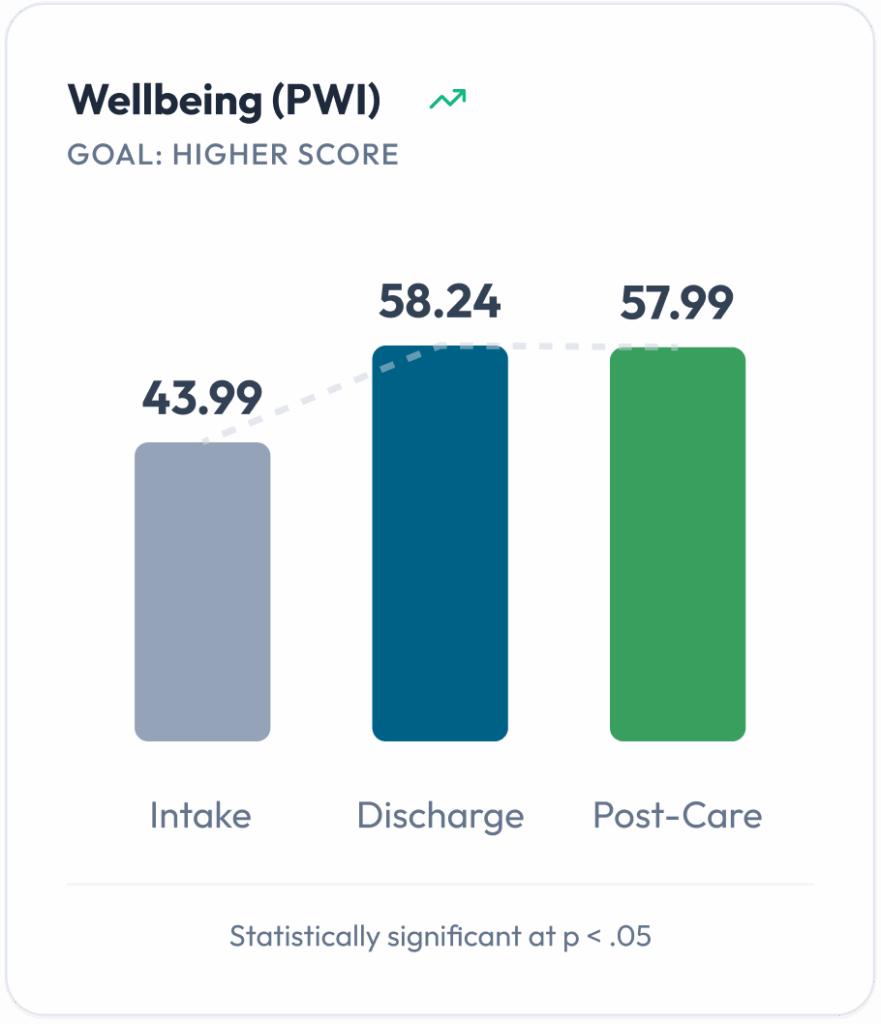
Lower symptoms matter, but daily life tells you what recovery looks like. This section uses PWI to look at day-to-day function and stability. The goal is simple. Do people live better, stay steadier, and handle life with more control? The results show gains during care, and those gains stay higher after discharge.
Explore this: Does symptom relief alone capture your program’s impact? How do functional gains shift your view?
Sustained care matters, but long-term life shows what recovery really looks like. This section uses PHQ-9, GAD-7, and PWI to track daily function and stability over five years. The goal is simple. Do people stay abstinent, keep crises at bay, and handle life with more control after discharge? The results say yes. When care is continuous and clinically integrated, gains don’t just happen during treatment; they last.
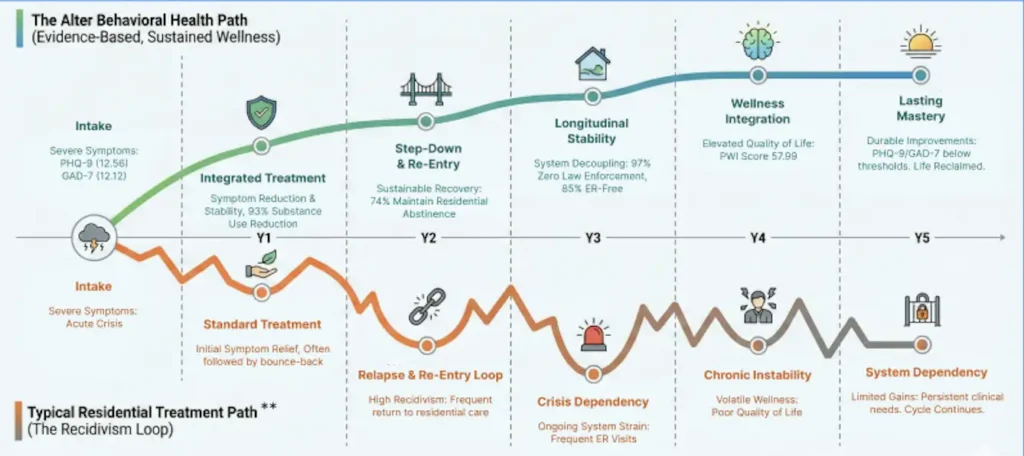
Explore this: Does symptom relief alone capture your program’s impact? How do functional gains shift your view?
You cannot trust outcome data if participation falls apart. This section shows how many assessments patients completed across the full timeline. It tracks completion for PHQ-9, GAD-7, and PWI from intake to follow-up. Strong participation makes the results more reliable and reduces blind spots.
Consider this: How does engagement correlate with outcome quality in your own programs?
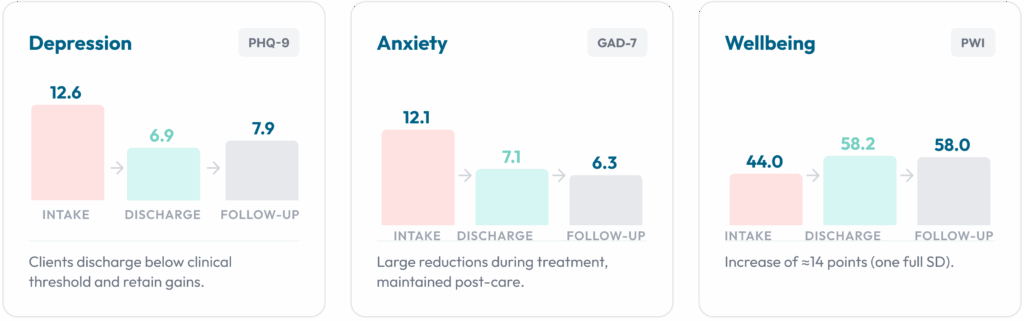
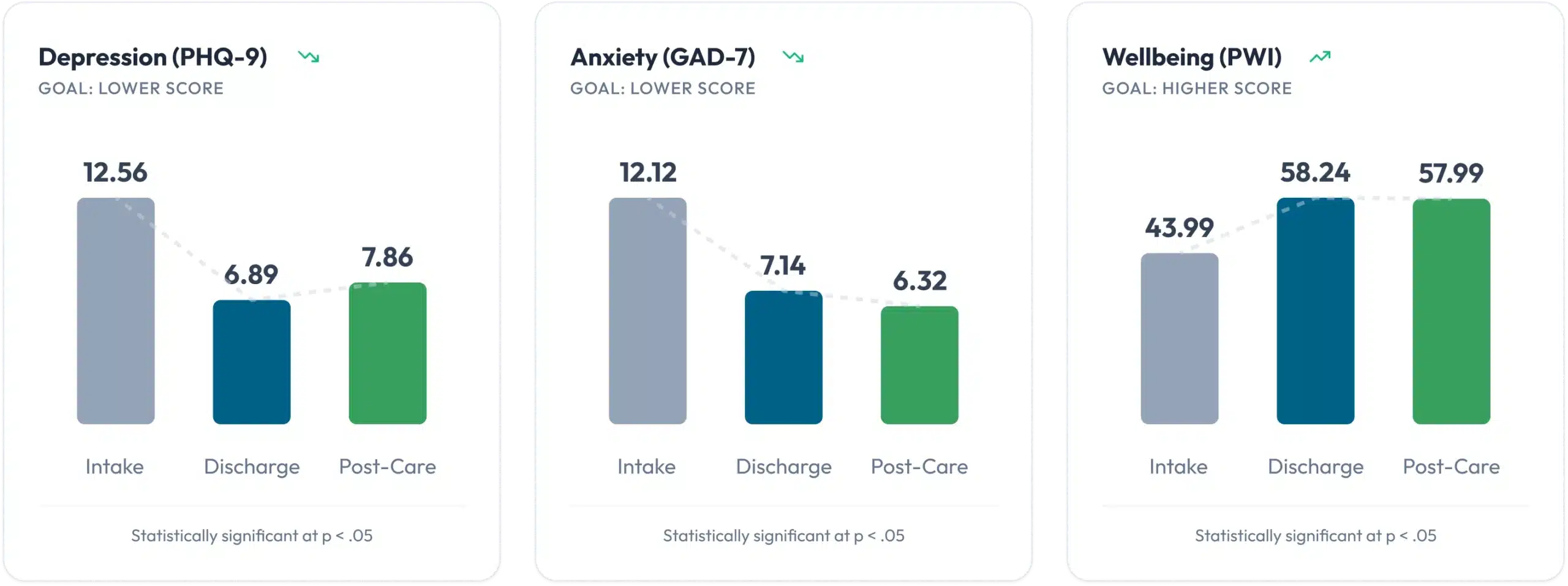
This section asks the hardest question: Do gains last after discharge? The report follows outcomes up to 180 days after someone leaves. It checks whether depression and anxiety climb back up and whether daily function drops again. The results show stability over time, not a rebound.
Key question: What does the durability of improvement mean for patient-centered care models?
Alter collects the data in a consistent way and uses clinical tools that are widely used in healthcare. The analysis looks at change across time while accounting for differences between patients. Alter also shares the method clearly so readers can understand what was measured, when it was measured, and how results were reviewed.
Explore the Full Outcomes Report
Client success/outcomes audit was performed by an independent 3rd party – Pacific Analytics