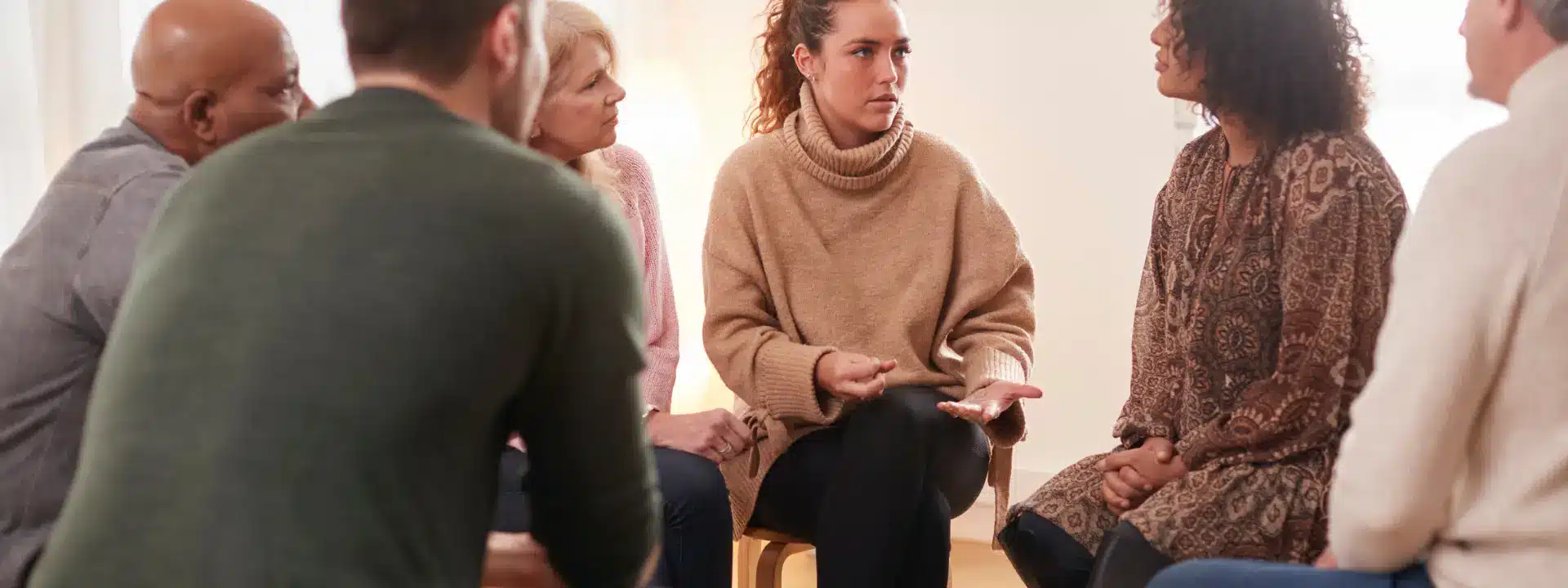

Some hurts stay inside you. They do not go away with time. Some wounds are deep, long, and silent. Not all trauma comes from one scary moment. Some trauma comes from many hard moments stacked one on top of the other. That is where you started questioning, “What is complex PTSD?”
You might know PTSD as fear after a bad event. A crash on the road. A blast in war. A break-in at night.
But trauma can also be long, slow, and repeated. That kind of trauma changes the nervous system. It changes how you feel about yourself, how you trust others, how you sleep at night, and how you react to small things that remind you of bigger hurts.
Complex PTSD is not just fear. It is fear plus identity change plus emotional pain plus relationship strain. It is the kind of trauma that makes you feel glued to the past, even when you are safe in the present. It lives in the gut. It lives in the jaw. And it lives in the sighs you don’t know you’re making.
So, what does the science say? The very best research tells us that this is not made up. It is real. It shows up in numbers. It changes lives. And most importantly, it can be treated.
The healing journey is a path. And you do not have to walk it alone.
Why is Complex PTSD Different From PTSD
People often say PTSD when they mean trauma. But that is too simple.
Think of PTSD as a single deep cut. You saw it, it hurt, it left a scar. But complex PTSD is many cuts, over time, in places you don’t see.
The world’s top medical journal BMJ, published a big 2025 guide on complex PTSD. It was written by expert clinicians, Joanne Stubley, Beverley Chipp, and Marta Buszewicz, who lived through trauma. The researchers made a few things very clear:
- PTSD comes from one or a few big events.
- Complex PTSD comes from repeated, long, or chronic harm that keeps happening over time.
- Complex PTSD rewires emotions, self-view, and relationships beyond fear alone.
This finding is important because the treatment must treat the whole person, not just fear memories.
How Do You Know If It’s Complex PTSD
Let’s break down what that means in simple words. How do you know if it is just PTSD? Or complex PTSD?
Ask yourself:
- Does your body feel stuck in fight or flight even when there is no danger?
- Do small things trigger huge reactions?
- Do you feel bad about yourself, even when people say you are fine?
- Are your relationships hard, even with people you love?
In a large global study of 138,681 people, Phillipa An Huynh and her team found that about 6.2% of people in trauma-exposed groups fit the criteria for complex PTSD when measured with the official World Health Organization tool. In certain groups, like people in clinical care or survivors of domestic violence or sexual abuse, almost half met the criteria.
That tells us two big things:
- Complex PTSD is much more than rare fear.
- It shows up especially in those with prolonged hardship.
It is not just about memory. It is about the nervous system, the self, and the world around you.
Why Does Complex PTSD Affect Relationships
When trauma hits again and again, it digs into the part of you that connects to others. Some trauma comes from people we trusted. That changes how we trust, love, and bond later in life.
Weili Lu, Ke Wang, Kim Mueser, and colleagues (2025) found that symptoms of complex PTSD were much higher when compared with simple PTSD. People with CPTSD plus other serious conditions had even more trouble with relationships and emotional stress.
It tells us something simple:
- Complex PTSD tangles up emotions and attachment styles.
- It is not just memories that hurt. It is how you see yourself with others.
If you have trouble trusting friends after trauma, you are not failing. You are showing a pattern born of stress that was never meant to be forgotten.
That is why at Alter Behavioral Health, therapies like Dialectical Behavioral Therapy (DBT) and Cognitive Behavioral Therapy (CBT) are not just talk. They are practice, training you to feel safe with others again. These skills are especially powerful in intensive residential settings where you can practice connection every day.
How Do Doctors Diagnose Complex PTSD
Diagnosis does not happen in a single moment. Good diagnosis happens because someone listens, measures, and watches patterns over time.
Doctors use tools like the International Trauma Questionnaire (ITQ) to check for both PTSD symptoms and the extra elements of complex PTSD (like emotional regulation and self-view). This tool was from the International Classification of Diseases (ICD-11), the official global health standard.
The BMJ guide from 2025 (cited above) confirms this diagnosis is not guesswork. It shows how clinicians look for patterns (not just fear) in how someone feels, behaves, and connects.
Here’s the key:
- PTSD can be seen in flashbacks and avoidance.
- Complex PTSD shows in identity, emotion, and relationships, too.
Diagnosis matters. Because the right treatment must fit what the brain is doing now, not what it did then.
Why is Treatment for Complex PTSD Unique
Typical PTSD treatment focuses on fear memories. Complex PTSD needs something wider. The nervous system is not just afraid. It learned to expect harm.
A 2025 scientific review by Jia-Hui Hu and colleagues looked at many therapy studies for complex PTSD. It found that well-structured psychological therapies help reduce:
- PTSD symptoms
- Depression
- Anxiety
- Emotional disconnection
These benefits were still there at follow-up, showing real progress over time.
Here’s what that tells us:
- Complex PTSD heals in layers.
- Not just one therapy works — a mix helps.
- Recovery is practice, patience, and pattern change.
That is why residential care matters. In a treatment home, you receive:
- Daily therapy (not once a week)
- Trauma-informed care
- Constant support
- A predictable, safe space to learn new patterns
At Alter Behavioral Health, therapies like CBT and DBT set the foundation. But residential programs give time and structure for the nervous system to rewire itself.
How Long Does Recovery from Complex PTSD Take
People want a number. They want weeks. They want months. But healing does not work like a phone download. It works like training your nervous system to trust again.
A study by Jia-Hui Hu and colleagues (cited above) also shows people can feel meaningful shifts within months of structured treatment. Others take years to build safety and stability, especially when trauma was long or repeated.
So, here’s the truth (in simple words):
- Healing isn’t instant.
- It isn’t linear.
- It does happen with the right support and time.
Residential treatment gives intensity and continuity that outpatient care alone cannot. You go deeper, faster, and with guides who know the terrain.
FAQs
1. What is complex PTSD?
Complex PTSD is trauma that goes beyond fear. It includes emotional pain, identity issues, and trouble in relationships. It stems from long or repeated harm.
2. Is complex PTSD the same as PTSD?
No. PTSD often comes from one major event. Complex PTSD comes from many repeated harms and affects identity and emotions, too.
3. Can a doctor diagnose complex PTSD?
Yes. Clinicians use structured tools based on the ICD-11 system to check symptoms, emotions, and patterns over time.
4. Why does complex PTSD make relationships hard?
Trauma changes how the brain expects safety. That makes trust and closeness feel dangerous or unstable.
5. Is treatment possible?
Yes. Research shows structured therapies help reduce symptoms and build stability over time.
6. How long is the recovery?
Healing can take months or years. It depends on your history, support, and therapy intensity.
7. What’s the difference between residential and outpatient care?
Outpatient care is weekly therapy. Residential care is daily support and growth inside a treatment setting.
8. Can CBT help?
Yes. CBT helps train the brain to think and feel differently over time.
9. Is medication part of treatment?
Medication can help with symptoms, but therapy and support are key for lasting change.
10. Should I seek professional help?
If trauma affects daily life, a trained clinician can help you map a real path to healing.
Step Into Healing With the Right Care
Complex PTSD is not faint. It screams in the nervous system. It rewires emotions. It shapes thoughts and relationships. But the science is clear: Symptoms can lessen. Patterns can shift. People can relearn how to be safe in their own bodies.
At Alter Behavioral Health, you get real trauma-informed care rooted in evidence. Therapies like CBT and DBT give you tools. Residential treatment gives you time to use them.
Your pain has a name. Your healing can have a path.
Reach out today. Get clarity. Get connected. And get the support that meets the depth of your lived experience.